PEX-A vs PEX-B Repipe Differences Explained
If you are planning a whole house repipe, choosing between PEX-A and PEX-B matters. Both materials are approved for residential plumbing and both are widely used across Southern California. The real difference comes down to flexibility, connection method, long term performance, and how the system is installed. At SoCal Repipes, we primarily install Uponor PEX-A, but we can also install PEX-B or any customer-preferred PEX system based on your needs, budget, and home layout.
What Is PEX Plumbing and Why It Replaced Older Pipes
PEX is cross-linked polyethylene piping designed to replace aging copper, galvanized, and polybutylene water lines. PEX does not corrode, does not develop scale buildup like metal pipes, and is more resistant to movement, vibration, and temperature changes. For homes with slab foundations, attic runs, or multiple fixtures, PEX offers a cleaner layout with fewer joints and better long term reliability.
PEX-A vs PEX-B Key Differences
Flexibility and Installation Method
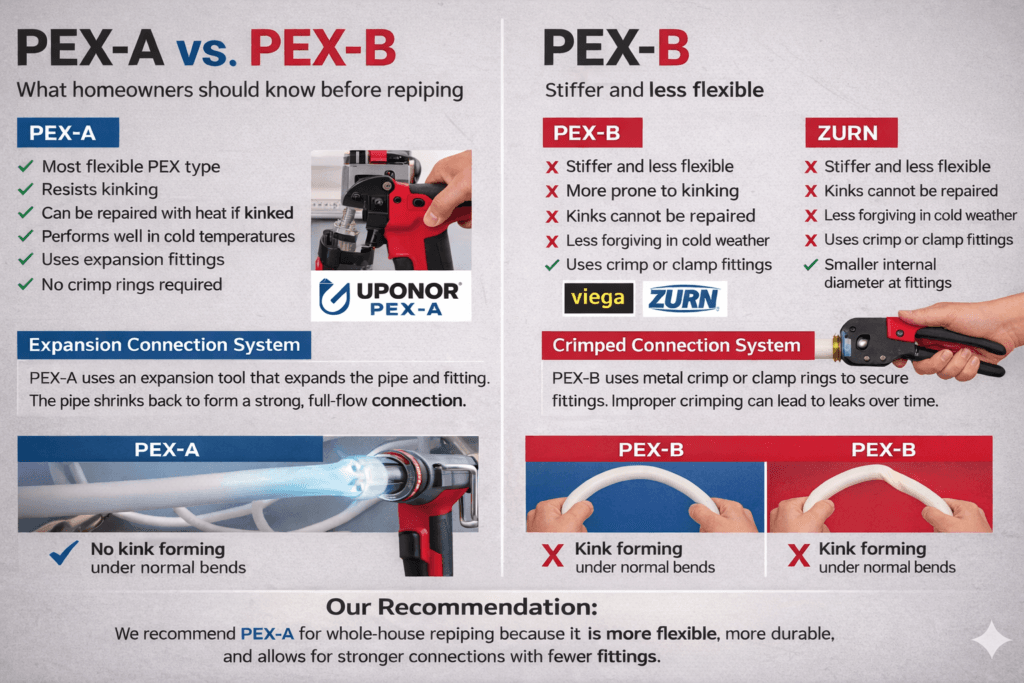
PEX-A is the most flexible form of PEX. It can bend tighter without kinking, which allows longer continuous pipe runs and fewer fittings. PEX-A uses an expansion connection method that allows the pipe to expand over the fitting and shrink back for a secure connection.
PEX-B is more rigid and typically uses crimp or clamp style fittings. While certified and code-approved, PEX-B usually requires more fittings to navigate turns, which increases connection points within the system.
Water Flow and Pressure
PEX-A expansion fittings maintain a similar internal diameter to the pipe itself, allowing better water flow through the system. This can be noticeable in homes with multiple bathrooms or simultaneous water use.
PEX-B insert fittings slightly reduce the internal diameter at each joint. While this does not violate code, systems with many fittings may experience minor pressure loss depending on layout.
Freeze and Heat Resistance
PEX-A has higher elasticity, allowing it to expand and return to shape during freeze and thaw cycles. This makes it more forgiving in temperature fluctuations.
PEX-B is also freeze resistant but less elastic. In freezing conditions, it does not recover as easily once stressed.
Durability and Service Life
PEX-A is typically cross-linked at a higher percentage, which improves chemical resistance, chlorine tolerance, and long term durability. This is one of the reasons Uponor PEX-A is commonly used for whole house repiping.
PEX-B is also durable and approved for long term use when installed correctly with certified fittings and tools.
Cost Differences
PEX-A material costs are higher than PEX-B. However, PEX-A installations often require fewer fittings and less labor complexity. PEX-B can be a cost-effective option for certain homes depending on layout and access.
Which PEX Is Better for a Whole House Repipe
For most full repipe projects, PEX-A offers better system performance, fewer fittings, and greater flexibility. This is why SoCal Repipes prefers Uponor PEX-A for whole house repiping.
That said, PEX-B remains a valid and approved option. Some homeowners prefer PEX-B due to material cost or familiarity. We install both systems and design each repipe based on the structure of the home, water demand, and customer preference.
Why Professional Repipe Specialists Matter
The success of a PEX repipe depends more on installation than on the pipe itself. Proper routing, minimizing fittings, avoiding slab connections, pressure balancing, and code compliance all require experience. A poorly installed PEX system can fail regardless of material.
SoCal Repipes specializes in full repiping projects, not spot repairs. We design systems for long term reliability, clean wall and ceiling access, and efficient completion with minimal disruption.
PEX-A vs PEX-B Repipe FAQs
Can I choose which PEX is installed?
Yes. While we prefer Uponor PEX-A, we can install PEX-A or PEX-B based on your preference.
Is PEX safe for drinking water?
Yes. PEX piping is approved for potable water and meets national plumbing standards.
How long does a whole house PEX repipe take?
Most residential repipes are completed in one to three days depending on home size and layout.
Will walls be repaired after the repipe?
Yes. Access points are patched after the plumbing work is completed.
Schedule a PEX Repipe Consultation
If you are comparing PEX-A vs PEX-B for a whole house repipe, our team can walk you through the best option for your home. We provide clear recommendations, transparent pricing, and professional installation across Southern California.